
Offline-first web design — building websites that load and function on slow, intermittent, or completely unavailable internet connections — is the most resilience-relevant digital infrastructure decision a Caribbean business can make, given the region’s documented vulnerability to hurricanes, grid failures, and variable mobile coverage. A Progressive Web App (PWA) built with offline-first principles caches essential business content locally so customers can access service pages, contact details, and location information even without an active connection. For Jamaican and Caribbean businesses, this is not a technical luxury; it is the difference between staying reachable during a storm and going entirely dark at the exact moment customers need you most.
Listen to this article
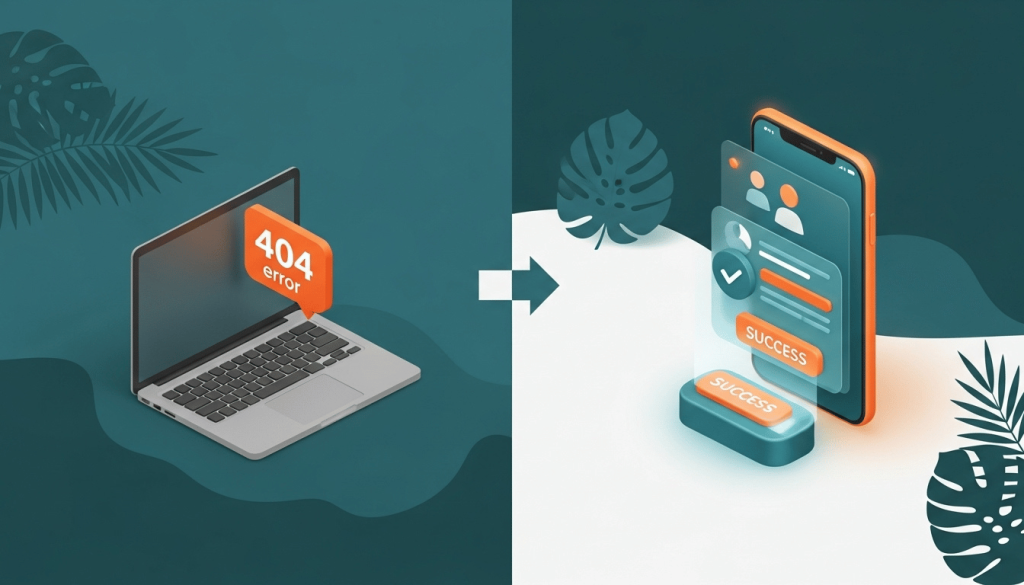
What does your website do when the internet goes down? A progressive web app keeps working.
Not metaphorically. Not as a thought experiment. What does it actually do when a customer in Montego Bay types your business name into their phone browser during a slow network patch, or when connectivity drops the way it did across western Jamaica during Hurricane Melissa?
If the answer is “it shows a blank screen,” or “it times out,” or “honestly, I don’t know,” then this article is for you.
I’m Simmy Sterling, Content Alchemist at Digisolly. My job is to translate the technical stuff into plain language that actually helps Jamaican business owners make better decisions. And right now, one of the most important decisions a small business can make about its website has nothing to do with colours, fonts, or whether to add a chatbot.
It’s about what happens when the signal disappears.
As of 2026, a new development standard is quietly changing what a “good website” means. It’s called Progressive Web App (PWA) development. And for Jamaican businesses, in a Caribbean environment where infrastructure can be unpredictable, it isn’t just a technical upgrade. It’s a survival strategy.
What PWA Development in Jamaica Actually Means (In Plain Language)
A Progressive Web App is not a separate app you download from a store. It’s a website built with a specific set of technologies that make it behave more like a native mobile app, and, critically, work even when connectivity is weak or absent entirely.
Here’s the alchemy part: a PWA can cache your most important content locally on a visitor’s device the first time they visit. So the next time that person comes back, even without a steady connection, they can still see your services page, your contact details, your location, your hours. The site loads from their device, not from a faraway server.
For a Jamaican salon owner in Spanish Town whose customers are checking hours on a patchy 4G signal, that’s not a nice-to-have. That’s the difference between a booking and a bounce.
PWA development in Jamaica is still in early days, which means businesses that adopt it now are building a real competitive edge before the rest of the market catches up.
Hurricane Melissa Changed the Rules
Let’s be honest about what Hurricane Melissa revealed.
For the parishes of western Jamaica, Westmoreland, Hanover, and St. James, the storm didn’t just disrupt business operations. It exposed a structural vulnerability that most business owners had never thought to consider: what happens to your digital presence when the infrastructure it depends on fails?
Fixed-line internet went down. Mobile networks were overloaded. Customers who wanted to check if a pharmacy was open, if a hardware store still had supplies, if a clinic was accepting walk-ins, found themselves staring at error pages and spinning load indicators.
The businesses that stayed visible during that window weren’t always the ones with the best products or the highest Google ratings. They were the ones whose digital systems had been built with disruption in mind.
That’s the lesson Melissa wrote in capital letters for the whole island, even for businesses far east of the storm’s path. Disruption doesn’t have to hit you directly to affect your customers’ ability to reach you. A degraded network in one parish, a regional outage, a power cut that takes down a tower — any of these can make a traditional website invisible at the exact moment someone needs to find you.
Digisolly has written about this in detail in The Hurricane Melissa Effect. If you haven’t read it, start there for the full context on what the storm changed for Jamaican businesses.
The short version: resilient digital infrastructure is no longer a premium upgrade. It’s the baseline.
Why Traditional Websites Fail Under Pressure
A standard website is, at its core, a remote document. Every time someone visits, their device sends a request to a server, the server sends back the page, and the browser renders it. This works beautifully when everything is working beautifully.
But the whole chain breaks if:
- The visitor’s connection is slow or intermittent
- The server is under load
- Regional connectivity is disrupted
- Mobile data drops between towers
For businesses in markets with mature, stable infrastructure, this is rarely a problem. A progressive web app solves this. For businesses in Jamaica and across the Caribbean, where infrastructure quality can vary significantly between parishes, and where weather events can degrade connectivity with little warning, this is a real, recurring risk.
@import url(‘https://fonts.googleapis.com/css2?family=Inter:wght@300;400;600;700&display=swap’);
body {
font-family: ‘Inter’, sans-serif;
background: #020617; /* Deepest black */
padding: 2rem 1rem;
color: #f1f5f9;
}
.matrix-card {
max-width: 1000px;
margin: 0 auto;
background: #0f172a;
border-radius: 1.5rem;
border: 1px solid #1e293b;
overflow: hidden;
box-shadow: 0 25px 50px -12px rgba(0, 0, 0, 0.5);
}
.row-hover {
transition: all 0.2s ease;
}
.row-hover:hover {
background-color: rgba(30, 41, 59, 0.5);
}
.status-badge {
padding: 0.25rem 0.6rem;
border-radius: 6px;
font-size: 0.7rem;
font-weight: 800;
text-transform: uppercase;
letter-spacing: 0.05em;
}
.status-low { background: rgba(239, 68, 68, 0.1); color: #f87171; border: 1px solid rgba(239, 68, 68, 0.2); }
.status-medium { background: rgba(245, 158, 11, 0.1); color: #fbbf24; border: 1px solid rgba(245, 158, 11, 0.2); }
.status-high { background: rgba(16, 185, 129, 0.1); color: #34d399; border: 1px solid rgba(16, 185, 129, 0.2); }
.status-critical { background: rgba(59, 130, 246, 0.1); color: #60a5fa; border: 1px solid rgba(59, 130, 246, 0.2); }
Caribbean Infrastructure Resilience
How different website technologies handle connectivity disruptions.
| Website Type | Offline Capability | Weak Connections | Resilience |
|---|---|---|---|
|
Traditional Website
Desktop-First
|
None — shows blank or error page | Slow to fail, no fallback | Very Low |
|
Mobile-Optimised
Responsive Web
|
None — server-dependent | Better perf, same vulnerability | Low |
|
PWA
The Modern Standard
|
Partial to Full — loads cached content | Fast, loads from device cache | High |
|
Native App
iOS / Android
|
Full offline functionality | Very fast, no initial HTTP wait | Very High |
Source: Compiled from Google Web.dev PWA documentation 2024, MDN Web Docs, and industry analysis of Caribbean digital infrastructure resilience patterns.
The table above tells the story simply. A mobile-optimised site is better than nothing, but it fails the same way a traditional site fails when connectivity disappears. A PWA changes the equation.
What Resilient Digital Infrastructure Looks Like for a Small Business
Here’s what PWA development in Jamaica delivers in practice, for a business of any size.
Your key content loads without a live connection. Service menus, location, hours, contact details — the information customers search for in a pinch — can be available from device cache. This is the core offline-first principle.
The app installs to a customer’s home screen without going through an app store. A customer who visits your PWA and adds it to their phone has a branded icon, fast loading, and app-like experience with no download barrier. For a tourism business in Ocho Rios, that’s a smooth handover from “I found you on Google” to “I’ve got your details saved.”
Performance improves on slow networks. Because PWAs use service workers to manage caching (see Google’s PWA documentation), they serve content faster than traditional sites even when connectivity is present but sluggish. Think of it as the difference between ordering from a menu that’s been handed to you versus waiting for the waiter to read it to you from another room.
Push notifications become possible. A PWA can notify a subscriber of a new service, a flash sale, or a change in hours without needing a social media platform as the middleman. For a Portmore mechanic whose customers come in seasonally, that’s a direct line that no algorithm can mute.
For Jamaican small businesses, resilient digital infrastructure means building systems that serve customers at their point of need — not just when conditions are ideal. As we’ve outlined in Why Every Jamaican Business Needs a Strong Online Presence in 2026, visibility is not a luxury. It is the foundation.
Common Questions About PWA Development in Jamaica
Is a progressive web app the same as a mobile app?
No. A PWA lives in the browser, not the app store. Customers don’t need to download anything. It behaves like an app — fast loading, home screen icon, offline capability — but it’s accessed through a URL, the same way a website is. That removes the biggest barrier to app adoption: the friction of a download.
Does my existing progressive web app or website need to be rebuilt from scratch?
Not always. If your site is built on a modern platform, it may be possible to layer PWA functionality on top of it incrementally. The right answer depends on your current tech stack. What isn’t advisable is ignoring the question entirely.
Will a progressive web app affect my Google rankings?
Positively, in most cases. Google’s Core Web Vitals reward fast-loading, mobile-friendly, stable experiences. PWAs typically perform well on all three. Combined with the SEO and AEO strategy we build into every Digisolly digital presence, a PWA doesn’t just keep you visible during disruptions. It strengthens your visibility during normal operations too.
How does this connect to AEO and AI search?
This is where it gets interesting. AI tools like ChatGPT and Perplexity are increasingly being used to find local service providers. They cite sources they can trust and verify. A business with a fast, stable, well-structured digital presence, including the structured data that PWA development supports, is a business that AI can read, parse, and recommend. Resilient digital infrastructure and Answer Engine Optimisation are, at their core, the same project.
The Businesses That Will Win the Next Disruption
Look, I’ve been thinking about this a lot.
The businesses that came through Hurricane Melissa with their customer relationships intact weren’t necessarily the ones with the biggest budgets or the most followers. They were the ones who had, sometimes by accident and sometimes by intention, built systems that didn’t depend entirely on perfect conditions.
The next disruption won’t announce itself. It never does.
But the businesses that invest in resilient digital infrastructure now — PWA development in Jamaica, structured content that AI can read, a digital presence that serves customers whether the signal is strong or thin — those businesses are building something that compounds. Every month they’re visible and accessible is a month their competitor who hasn’t made the shift is invisible.
@import url(‘https://fonts.googleapis.com/css2?family=Inter:wght@400;600;700&display=swap’);
body {
font-family: ‘Inter’, sans-serif;
background: #020617; /* Matches your black/off-black blog theme */
padding: 2rem 1rem;
color: #f1f5f9;
}
.chart-card {
max-width: 850px;
margin: 0 auto;
background: #0f172a;
border-radius: 1.5rem;
border: 1px solid #1e293b;
padding: 2.5rem;
box-shadow: 0 25px 50px -12px rgba(0, 0, 0, 0.6);
}
.bar-wrapper {
margin-bottom: 2rem;
}
.bar-label-group {
display: flex;
justify-content: space-between;
align-items: flex-end;
margin-bottom: 0.5rem;
}
.bar-bg {
height: 40px;
background: rgba(30, 41, 59, 0.5);
border-radius: 6px;
border: 1px solid rgba(51, 65, 85, 0.4);
overflow: hidden;
position: relative;
}
.bar-fill {
height: 100%;
transition: width 1.8s cubic-bezier(0.19, 1, 0.22, 1);
position: relative;
display: flex;
align-items: center;
padding-right: 12px;
justify-content: flex-end;
font-weight: 800;
font-size: 0.85rem;
}
/* Animated Pulse for Fragile Layers */
.fragile-pulse {
animation: flicker 4s infinite;
}
@keyframes flicker {
0%, 100% { opacity: 1; }
45% { opacity: 0.7; }
50% { opacity: 0.4; }
55% { opacity: 0.7; }
}
.resilience-tag {
font-size: 0.65rem;
font-weight: 800;
text-transform: uppercase;
letter-spacing: 0.05em;
padding: 2px 6px;
border-radius: 4px;
margin-left: 8px;
}
.tag-fail { background: rgba(239, 68, 68, 0.15); color: #f87171; border: 1px solid rgba(239, 68, 68, 0.3); }
.tag-pass { background: rgba(16, 185, 129, 0.15); color: #34d399; border: 1px solid rgba(16, 185, 129, 0.3); }
.gap-indicator {
position: relative;
border-left: 2px dashed #334155;
padding-left: 1rem;
margin-left: 4px;
}
Structural vs. Incremental Resilience
Accessibility of key business information during simulated Caribbean connectivity disruption.
The Structural Gap
Source Methodology
Compiled from Google Web.dev Offline Cookbook 2024, MDN Service Worker API documentation, and resilience testing benchmarks from web.dev case studies.
Structural Advantage:
+592% higher availability than traditional sites.
window.onload = () => {
const bars = document.querySelectorAll(‘.bar-fill’);
bars.forEach(bar => {
const finalWidth = bar.style.width;
bar.style.width = ‘0%’;
setTimeout(() => {
bar.style.width = finalWidth;
}, 200);
});
};
Your Offline-First Checklist: Where to Start
Not every business needs to rebuild its entire digital presence tomorrow. But every business should know where it stands.
Here’s a practical starting point:
☑ Test your current website on a throttled connection. In Chrome on desktop, open Developer Tools, go to Network, and set the speed to “Slow 3G.” If your site takes more than 4 seconds to load key content, you have a resilience problem.
☑ Check whether your site works at all when offline. Turn off wifi and mobile data, then try to load your site. What happens? If it’s a blank screen, that’s your baseline to improve from.
☑ Audit your most critical customer-facing content. What do customers need most urgently when they search for you? Hours, location, services, a phone number. These are your offline-first priorities.
☑ Ask your web developer whether PWA features can be layered onto your current site. Service workers, a web app manifest, and basic caching can often be added to existing sites without a full rebuild.
☑ If you’re building or rebuilding, specify offline-first from the brief. Don’t assume it’s included. Ask the question explicitly.
If you’re not sure where to start, or you don’t have a developer to ask, that’s exactly the conversation Digisolly is here to have with you.

Here’s the Bottom Line
Hurricane Melissa didn’t create the problem of fragile digital infrastructure in Jamaica. It just made it impossible to ignore.
A website that disappears when connectivity is stressed is not a digital presence. It’s a digital liability. And in a Caribbean market where customers are mobile-first, where weather and infrastructure can be unpredictable, and where AI tools are increasingly shaping how businesses are found and recommended, the gap between a traditional website and a resilient, offline-first digital presence is widening fast.
PWA development in Jamaica is still early enough that adopting it now is a genuine differentiator. But that window won’t stay open forever.
So what’s your next step?
Find Out Where You Stand Not sure whether your current site passes the resilience test? Digisolly’s free Digital Presence Audit shows you exactly what customers experience when they try to find you, including on slow connections and during disruptions. Get your audit.
Build It Right From the Start Ready to build or rebuild your digital presence with offline-first as a core feature, not an afterthought? Digisolly builds resilient digital infrastructure for Jamaican small businesses. talk.
Not Sure Where to Begin? Book a free 30-minute strategy call. No pressure, no sales pitch. Just an honest conversation about what your business needs and what actually makes sense for your situation right now. Book your call.
Your customers need to find you on the best days and the hard ones. Make sure your digital presence is ready for both.
Sources & References
Google Web.dev — Progressive Web Apps overview
MDN Web Docs — Service Worker API documentation
Google Web.dev — Offline Cookbook
Think with Google — Mobile site speed and business impact
BrightLocal — Local Consumer Review Survey 2024
Caribbean Telecommunications Union — Digital infrastructure resilience reports
Google Core Web Vitals — Performance scoring and SEO impact
GSMA Mobile Economy — Caribbean mobile connectivity data 2024

Simone “Simmy” Sterling is the Content Alchemist at Digisolly, writing about AI-first digital strategy for Jamaican small businesses. She turns the complexity of AI search, Answer Engines, and digital visibility into plain language that actually makes sense, and actually gets used. Think less tech jargon, more real talk over a good cup of Blue Mountain.